
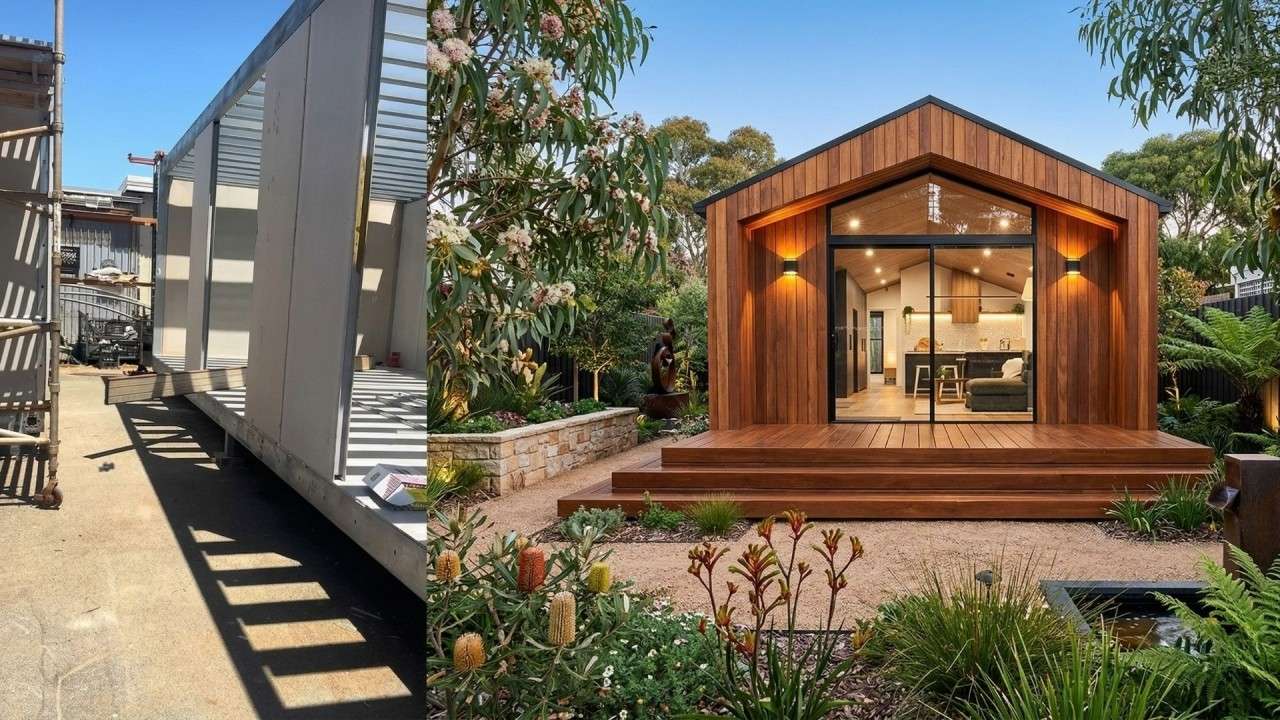
Modular housing has moved from a niche idea in Australia’s construction sector into a serious part of the national housing conversation.
For years, modular construction was often seen as an alternative building method. Today, it is being discussed by governments, builders, manufacturers, investors and housing providers as one of the practical ways to deliver homes faster, with greater consistency and less exposure to traditional site-based delays.
That shift is not happening by accident.
Across Australia, there is growing interest in off-site construction, prefabricated building systems and modern manufacturing methodologies. Government agencies are looking at faster procurement pathways. Industry bodies are working to improve quality and compliance standards. Research groups are exploring how factory-based housing can support larger-scale delivery. At the same time, lenders and housing providers are beginning to recognise that the old construction model may not be enough to meet current housing demand.
But here is the important point: modular housing will not scale simply because factories can build faster.
The real challenge is not just manufacturing.
The real challenge is integration.
Why Modular Housing Is Gaining Momentum
Modular housing offers clear advantages when it is planned and delivered correctly. Homes, modules, panels or prefabricated components can be manufactured in a controlled factory environment while site preparation happens at the same time. This can reduce weather delays, improve quality control and shorten the overall delivery timeline.
The Australian Building Codes Board has also recognised the importance of prefabricated, modular and off-site construction by providing guidance on how these methods relate to the National Construction Code. You can learn more through the Australian Building Codes Board and the National Construction Code here:
Australian Building Codes Board – National Construction Code
Industry research is also supporting the shift. Building 4.0 CRC has been actively involved in research around modern methods of construction, prefabrication and building system innovation in Australia. More information can be found here:
Building 4.0 CRC
These are positive developments. They show that modular housing is no longer sitting on the edge of the construction industry. It is becoming part of the mainstream discussion.
However, discussion alone does not deliver homes.
The Missing Link in Modular Housing Delivery
Despite the growing support for modular housing, the sector still represents only a small part of overall housing delivery in Australia.
Why?
Because modular construction is not just a product. It is a system.
Factories can efficiently produce volumetric modules, panelised systems or prefabricated components. But the success of modular housing depends on what happens before and after the factory stage.
For modular housing to work at scale, the following elements need to be aligned:
- Design and engineering
- Planning and building approvals
- National Construction Code compliance
- Factory quality assurance
- Transport and logistics
- Site preparation
- Crane access and installation
- Local trades and service connections
- Defect management
- Warranty responsibility
- Handover and ongoing support
When these parts are treated separately, delays still happen. They simply move from the building site into paperwork, approvals, transport coordination or site readiness.
That is why the question should not be, “Can factories build faster?”
The better question is:
Can the entire modular housing delivery chain work as one coordinated system?
Modular Housing Needs System Integration
At present, many parts of the modular housing journey are still handled in isolation.
A manufacturer may focus on fabrication. A builder may focus on installation. A consultant may handle approvals. A transport contractor may manage delivery. Local trades may handle connections. Housing providers or buyers may then be left trying to understand who is responsible for what.
This fragmented approach creates uncertainty.
It can also create unnecessary risk.
A modular home may be built quickly in the factory, but if the site is not ready, the approvals are incomplete, the transport route has not been properly assessed, or the installation team is not coordinated, the project can still slow down.
That is where Factory2Key sees the real opportunity.
The future of modular housing in Australia depends on smarter coordination between manufacturers, builders, buyers, approval pathways, logistics providers and on-site delivery teams. The home, the site, the transport, the approvals and the installation must be treated as one connected journey — not five separate problems.
Why Coordination Matters More Than Speed Alone
Speed is one of the biggest advantages of modular housing, but speed only matters when the full process is ready to support it.
A factory can produce a home efficiently. But if the site works are delayed, the services are not connected, or the compliance documentation is incomplete, the speed advantage can be lost.
That is why modular housing requires early planning.
The best results come when the entire process is mapped before manufacturing begins. This includes checking the site, confirming access, understanding planning requirements, managing engineering inputs, coordinating delivery dates and making sure the installation pathway is clear.
When this is done well, modular housing can provide greater certainty for buyers, builders, developers and housing providers.
When it is not done well, modular housing can become just as frustrating as traditional construction.
The Future of Modular Housing in Australia
Australia does not have a shortage of modular innovation.
What the industry needs now is better alignment.
The next stage of modular housing will not be defined only by how many factories are built or how quickly modules can be produced. It will be defined by how well the entire delivery chain works together.
That means better systems. Better coordination. Better communication. Better accountability.
Factory2Key exists to help bring those moving parts together.
By coordinating the journey from factory production through to delivery, installation and handover, Factory2Key helps reduce the friction that often slows modular projects down.
Because in the end, modular housing is not just about building differently.
It is about delivering differently.
If Australia is serious about making modular housing a mainstream delivery pathway, the focus must shift from isolated construction stages to complete system integration.
Smarter. Faster. Built to Last.
If you are exploring modular housing, factory-built homes or a more coordinated pathway from factory to key, connect with Factory2Key to start the conversation.
Connect with Factory2Key to explore how smarter integration can help turn modular potential into mainstream delivery.