
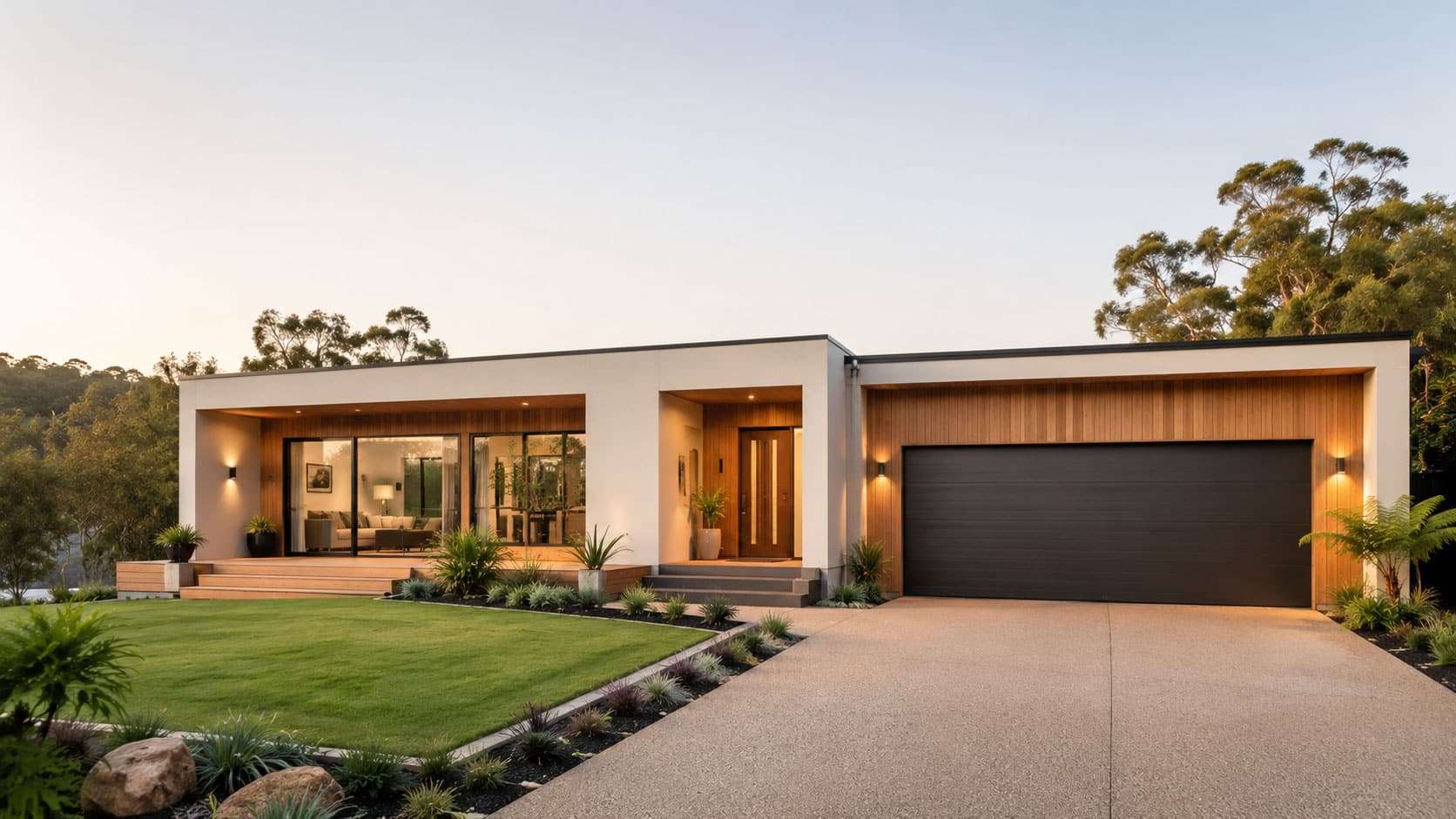
A recent Domain article explored an important question that many buyers, investors and developers are now asking: do modular homes deliver long-term value compared with traditional builds? It is a timely question, especially as modular construction becomes more visible across the Australian housing market and more people begin to consider factory-built homes as a serious alternative to traditional site-based construction.
Factory2Key co-founder Uwe Jacobs was quoted in the article, making a simple but important point. Modular construction is not as different from traditional construction as many people think. Many parts of a standard home are already manufactured off site, including roof trusses, windows, doors, cabinetry and other key components. Modular construction simply takes that same principle further by completing more of the building process in a controlled environment before the home is transported and installed on site.
But the bigger conversation is not really about whether a home is built in a factory or built entirely on site. The better question is whether the home is well designed, properly certified, suitable for the site and delivered through a system that protects quality from start to finish. That is where long-term value is created.
Modular Is Not a Shortcut
One of the biggest misunderstandings about modular housing is that it is somehow a shortcut or a lesser version of a traditional build. That is not how quality modular construction works. A modular home still needs to meet relevant building standards. It still needs engineering, approvals, site preparation, foundations, transport planning, installation, certification, services connection and final handover.
The difference is the delivery method. Instead of building everything exposed to weather, delays and changing site conditions, more of the construction process is completed in a controlled factory environment. When the process is properly managed, this can reduce weather-related delays, improve quality control, create more predictable timelines and reduce the number of moving parts on site.
However, modular construction only works well when the whole process is coordinated properly. The home itself matters, but the system behind the home matters just as much. Without proper planning, site assessment, logistics, installation and compliance management, the advantages of modular construction can quickly be lost.
Value Comes From Fundamentals
Whether a home is built traditionally or through modular construction, long-term value is still driven by the same fundamentals. Location, design, build quality, compliance, energy performance, liveability and market demand all play an important role in determining how a home performs over time.
A poorly designed home in the wrong location will not become a strong asset simply because it was built on site. In the same way, a well-designed and properly certified modular home should not be dismissed simply because more of it was built in a factory. The construction method is important, but it is only one part of the overall value equation.
This is the shift buyers and investors need to understand. A quality home should be judged by how well it performs, how well it is delivered and how well it meets the needs of the people who will live in it. The label “modular” should not automatically reduce confidence, just as the label “traditional” should not automatically guarantee quality.
The Real Risk Is Poor Coordination
In our view, the biggest risk in construction is not modular. The biggest risk is poor coordination. That applies to both traditional construction and modular construction. A project can run into problems if the site is not properly assessed, approvals are not managed correctly, access and transport are not considered early enough, or compliance is treated as an afterthought.
This is why Factory2Key focuses on the complete pathway from factory to key. We do not believe modular housing should be treated as a product that simply arrives on a truck. It needs a delivery system that brings together design, manufacturing, approvals, logistics, site works, installation, quality assurance and handover.
When these parts are aligned, modular construction can become a smarter and more predictable way to deliver homes. When they are not aligned, even a good product can become difficult to deliver. The process matters because the final outcome depends on much more than the factory build alone.
Why This Matters Now
Australia needs more housing, and it needs housing delivered with greater certainty. Buyers are facing affordability pressure, builders are dealing with labour and material challenges, and many regions need faster, more reliable ways to deliver homes. In this environment, modern manufacturing methodologies are becoming increasingly relevant.
Traditional construction will continue to play an important role. Factory2Key is not against traditional building, and we understand how hard it is to build well in the current market. But the industry also needs smarter delivery options that can help reduce pressure on time, labour, coordination and project risk.
Modular construction is one of those options. It is not suitable for every site and it is not the answer to every housing problem. But when it is suitable, and when it is delivered properly, it can offer a faster, more controlled and more reliable pathway to a completed home.
What Buyers Should Ask Before Choosing Modular
Instead of asking only whether a modular home will hold its value, buyers should ask more practical questions. Is the site suitable for modular delivery? Has access been properly checked? Are planning and approvals understood? Is the home compliant with the relevant building requirements? Is the manufacturer credible? Who is managing transport, installation and site coordination?
These questions matter because value is not created by the word “modular.” Value is created by the right home, on the right site, delivered through the right system. A modular home can only perform well if the planning, compliance and delivery process are handled properly from the beginning.
For investors and developers, the same principle applies. The focus should not only be on the construction cost. Time to completion, holding costs, rental start dates, delivery certainty and long-term maintenance all affect the overall result. A faster build is only valuable if the finished home is compliant, durable, liveable and suitable for the market.
The Factory2Key View
At Factory2Key, we believe modular construction should be judged on outcomes, not assumptions. The important questions are whether the home looks and feels like a quality permanent home, whether it is compliant, whether it is durable, whether it is energy efficient and whether it is suitable for the buyer’s needs.
The market is beginning to understand that modular construction is not a novelty. It is part of a broader shift toward smarter, more controlled and more predictable housing delivery. The recent Domain article is another sign that this conversation is entering the mainstream, but buyers, investors and developers still need to assess each project properly.
Do not choose modular just because it sounds faster. Do not reject modular because it sounds unfamiliar. Judge the project, the design, the compliance, the delivery system and the final outcome.
Final Thought
So, do modular homes hold their value? A better answer is that a well-designed, properly certified and professionally delivered modular home should be judged like any other quality home. It should not be judged by outdated assumptions or by whether every part was built on site.
It should be judged by how well it performs, how well it is delivered and how well it serves the people who live in it. That is what Factory2Key is focused on: not just building differently, but delivering better.
Factory2Key — Smarter. Faster. Built to Last.